All Categories
Featured
Ways To Vet Local Washington DC Solar Panel Installation ...
How To Prevent Expensive Mistakes With Pennsylvania PV In...
When You Choose To Move Forward With A Delaware Solar Pan...

Costs Associated With Virginia Solar Panel Installation Companies
Table of Contents
- – Hiring Qualified Virginia Solar Panel Installat...
- – Financial Perks And The 25 kW Property Tax Exe...
- – Ensuring Your Roof Provides 4.2–4.7 Peak Sun H...
- – Identifying Reliable Virginia Solar Panel Inst...
- – Evaluating The Impact Of HOA Governance On Vir...
- – Understanding The 1,200 W Plug-in Solar Cap Fo...
Hiring Qualified Virginia Solar Panel Installation Companies For Your Property
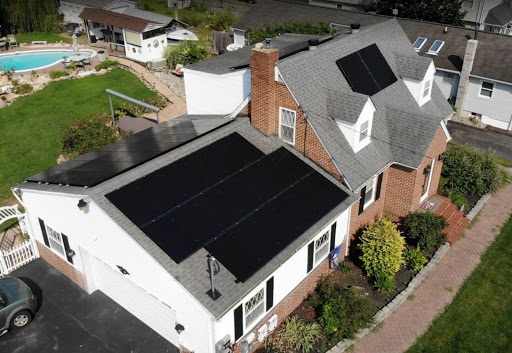
Transitioning to renewable energy requires you to navigate the intricate landscape of Virginia Solar Panel Installation Companies to ensure your home gets a high-quality, efficient system. Because these installers handle every technical detail from structural integrity to electrical grid integration, choosing a partner with verified workmanship standards is vital for long-term performance. You should understand that a typical 13.99 kW residential system represents a substantial investment, costing between $30,075 and $40,689 before applying any available incentives. By analyzing the workings of system sizing, financing models, and local regulatory protections, you can determine how to optimize your return on investment. This guide provides the foundational information you need to assess professional qualifications and identify the most dependable installers serving your area.
“Choosing the right system size is crucial.” — Lumina Solar
Financial Perks And The 25 kW Property Tax Exemption Cap Explained
The 25 kW property tax exemption cap is a primary financial mechanism that ensures your home’s assessed value does not rise due to your solar panel installation. By shielding the extra value of the equipment from local tax assessments, this policy allows you to realize the full economic advantage of your energy production without an increased tax liability. When you examine Which Virginia companies specialize in solar panel installation, ask how they log this exemption to ensure your local taxing authority correctly excludes the system from your property valuation.
“Virginia's net metering policy mandates that utilities credit customers for excess solar energy they produce at the full retail electricity rate.” — solarreviews.com
Beyond tax protections, your system creates value through several separate channels that offset the initial investment. Understanding these mechanisms is vital for modeling your long-term return on investment:
- NEM: You get credits at the full retail rate for every kilowatt-hour of surplus energy returned back to the grid, effectively turning your meter backward.
- Solar Renewable Energy Credits: These represent the environmental attributes of your electricity generation, which you can sell as a secondary income stream based on the total megawatt-hours your system produces.
- Federal tax considerations: You must factor in the sunsetting of the federal residential clean energy tax credit, which is no longer applicable to systems placed in service from January 1, 2026, onward.
Confirm with your chosen contractor that your system architecture remains under the 25 kW threshold to qualify for the full tax exemption status.
When assessing Virginia Solar Panel Installation Companies, you must first determine your solar system size, which averages 13.99 kW in the state, to understand how your roof solar compatibility and local daily irradiance hours—typically 4.2 to 4.7 per day—influence your total solar installation cost. You should speak with a Solar Panel Installation to compare an accurate solar installation quote, ensuring your chosen contractor holds a solar certification to guarantee technical proficiency while navigating complex HOA solar rules and potential participation in a group solar program. To optimize your financial return, examine how net metering and Renewable Energy Certificates function alongside the state property tax exemption for systems up to 25 kW, while deciding if a home battery, costing $10,000 to $13,000, or a UL-certified outlet solar capped at 1,200 watts better suits your energy independence goals. By concentrating on the average cost per watt of $2.53, you can better rationalize the total $30,075 to $40,689 investment, or the $18,000 to $22,000 range for smaller arrays, as you leverage available solar tax incentives to reduce your long-term expenditure.
Ensuring Your Roof Provides 4.2–4.7 Peak Sun Hours Daily For Solar Panel Installation
A roof is appropriate for solar panel installation when its physical properties permit it to collect the regional average of 4.2 to 4.7 peak sun hours per day effectively. Installers evaluate these conditions to guarantee that the energy production model accurately mirrors the physical realities of your home, as orientation, pitch, and shading determine how much sunlight your system transforms into electricity.
When you assess potential projects, grasping How Virginia solar panel installation companies compare in their site analysis techniques is essential. A professional assessment usually involves examining various critical structural and environmental factors:
| Factor | Optimal Condition | Impact on Productivity |
|---|---|---|
| Orientation | South-facing | Increases direct access to sunlight. |
| Pitch | 30 to 45 degrees | Adjusts panels with the sun's seasonal path. |
| Shading | Zero obstruction | Prevents voltage drops due to partial shade. |
| Roof Age | Less than 10 years | Prevents the necessity for premature system elimination. |
Beyond these variables, installers utilize specialized software to model irradiance levels, considering seasonal tree growth and adjacent structures that might project shadows during peak production windows. If your roof is approaching the end of its useful life, you should prioritize a roof replacement before scheduling an installation to avoid expensive maintenance later. Confirm the residual lifespan of your roofing materials and inspect for any structural vulnerabilities that might require reinforcement to sustain the weight of a mounted array.
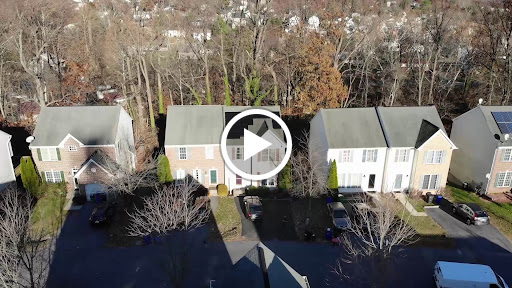
Identifying Reliable Virginia Solar Panel Installation Teams With The Switch Together Program
The Switch Together program is a statewide group-buying initiative that utilizes shared consumer demand to reduce the cost of a solar setup through a competitive reverse auction process. By gathering homeowners into a single buying group, the program invites qualified installers to compete for the project portfolio, which compels them to sharpen their pricing models beyond what you might receive in an individual solar bid. This structure helps you recognize Which Virginia companies specialize in solar panel installation by filtering for those qualified for handling large-scale, standardized projects while upholding the strict quality standards demanded by the initiative.
“Virginia Shared Solar Program (Community Solar), Rebate, Dominion Energy and Appalachian Power customers can subscribe to a share of.” — dominionenergy.com
When participating in this program, you benefit from a streamlined acquisition route that differs significantly from the traditional market method:
- Competitive Bidding: Installers provide their most competitive pricing to win the group contract, often reducing the standard $2.53 per watt market average.
- Vetted Standards: Participating installers must meet pre-defined criteria, ensuring they possess the required skill for local residential projects.
- Simplified Comparison: The program standardizes the scope of work, making it simpler to assess competing offers based on equipment quality rather than confusing service inclusions.
- Volume Savings: Collective buying power allows for bulk material procurement, which translates into lower overhead costs for your specific installation.
Review the particular equipment brands and service warranties offered through the current cycle to verify they align with your home’s energy production needs.
Evaluating The Impact Of HOA Governance On Virginia Solar Panel Installation
HOA rules influence Virginia Solar Panel Installation Companies by placing legal boundaries on the aesthetic and structural requirements that home associations can impose on your project. Because state law prioritizes renewable energy access, homeowners associations cannot enforce guidelines that create unreasonable obstacles to entry for residents seeking to mount solar equipment.
“The association may prohibit or restrict the installation of solar energy collection devices on the common elements or common area within the real estate development served by the association.” — law.lis.virginia.gov
When you are researching Virginia solar panel installation companies worth hiring, verify that your selected solar firm understands the specific protective statutes governing these common interest communities. These regulations serve to balance community standards with your right to generate clean energy. Specifically, an association cannot prohibit a solar installation unless their restrictions satisfy the following criteria:
- Cost Impact: Any stipulation that raises the total project expense by more than 5% is legally unenforceable.
- Performance Impact: Any requirement that reduces the projected efficiency or energy yield of the system by more than 10% is prohibited.
- Safety and Compliance: Associations may still require that installations follow standard building codes and safety regulations.
Navigating these rules demands a clear comprehension of how your system design might initiate an association review. The following table outlines the thresholds installers must maintain to ensure your project remains compliant with local governing documents:
| Restriction Type | Legal Threshold |
|---|---|
| Project Cost Increase | Maximum 5% over base quote |
| System Performance Loss | Maximum 10% reduction |
| Approval Authority | Restricted to sensible aesthetic standards |
Review your association’s specific architectural guidelines before finalizing your solar estimate to identify any potential conflicts regarding panel placement or visibility.
Understanding The 1,200 W Plug-in Solar Cap For Your Solar Panel Installation
A 1,200 W plug-in solar cap is the highest power limit allowed for streamlined, wall-outlet solar systems in Virginia as of July 1, 2026. Unlike a conventional rooftop array that requires a complicated electrical interconnection managed by a professional, these plug-in solar systems are designed for immediate, low-barrier energy generation. Because these units connect directly to your household circuit via a standard wall outlet, they function as a localized offset to your daily base-load power consumption rather than a comprehensive energy supply for the entire residence.
“Starting January 1, 2027, a qualifying device is exempt from traditional interconnection and net-metering requirements and utility approval or device-related fees, subject to Chapter 1052's conditions.” — pluginsolarus.com
When you are in the process of Finding a reliable solar panel installation company in Virginia, it is useful to grasp how these smaller systems vary from permanent installations:
| Feature | Plug-in Solar System | Standard Rooftop Installation |
|---|---|---|
| Capacity | Limited to 1,200 watts | Typically 13.99 kW average |
| Installation | User-managed via wall outlet | Requires professional electrical work |
| Safety | Must be UL certified | Standard electrical permitting |
The primary mechanism ensuring safety for these systems is the requirement for UL certification, which mandates that the hardware automatically shuts off from the grid during power outages. This prevents the unit from transmitting electricity into a downed line, a critical security feature that utility workers rely upon during repairs. While these systems offer a lower entry point, they do not qualify for the same incentives or grid credit program benefits as larger, professionally wired arrays.
Verify that your home’s electrical circuit can handle the specific wattage of your chosen plug-in equipment before buying to prevent tripping breakers.

Table of Contents
- – Hiring Qualified Virginia Solar Panel Installat...
- – Financial Perks And The 25 kW Property Tax Exe...
- – Ensuring Your Roof Provides 4.2–4.7 Peak Sun H...
- – Identifying Reliable Virginia Solar Panel Inst...
- – Evaluating The Impact Of HOA Governance On Vir...
- – Understanding The 1,200 W Plug-in Solar Cap Fo...
Latest Posts
Ways To Vet Local Washington DC Solar Panel Installation Companies
How To Prevent Expensive Mistakes With Pennsylvania PV Installation
When You Choose To Move Forward With A Delaware Solar Panel Installation
More
Latest Posts
Ways To Vet Local Washington DC Solar Panel Installation Companies
How To Prevent Expensive Mistakes With Pennsylvania PV Installation
When You Choose To Move Forward With A Delaware Solar Panel Installation